Background
The generation of reactive oxygen species (free radicals) occurs as a consequence of normal cellular metabolism.  Reactive oxygen is associated with DNA strand breaks and single base modifications (Halliwell and Gutteridge, 1989), the oxidation of amino acid side chains and fragmentation of polypeptides (Levine and Stadtman, 2001), and the degradation of polyunsaturated fatty acids and phospholipids (Bloomer and Goldfarb, 2004).  Many age-related diseases, including atherosclerosis and cancer, are linked to the deleterious accumulation of oxygen free radicals (McCance and Huether, 2002). 
 
The increase in oxygen uptake during aerobic exercise is accompanied by an elevation in reactive oxygen levels.  However, long-term endurance training effectively reduces the damage associated with increased oxygen uptake by enhancing the body's antioxidant defenses (Venditti and Di Meo, 1997; Powers and Leeuwenburgh, 1999).
 
Current Research   
Dr. Stover's research focuses on the effects of sprint training and antioxidant supplementation on skeletal muscle.  The hypotheses of the current study are as follows:
 
1.  Oxidative stress can be induced by acute, high intensity sprint exercise.
 
2.  Exercise-induced oxidative stress can be reduced by long-term, high intensity sprint training.
 
3.  Exercise-induced oxidative stress can be reduced by dietary supplementation with lipoic acid.
 
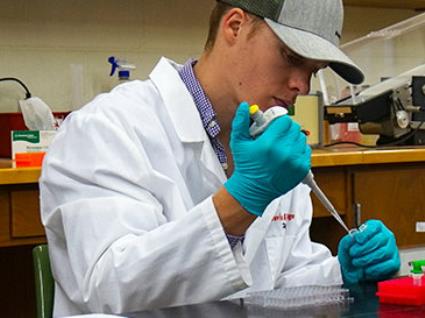
Acute, high intensity exercise for experimental mice consists of 30-second sprints on a rodent treadmill (15 degree incline) at a pace of 50 centimeters per second.  Training involves twice-weekly sprinting sessions for a total of 12 weeks.  Lipoic acid, an antioxidant that stimulates glutathione synthesis, is administered to experimental mice at a dose of 150 milligrams per kilogram body weight.  Oxidative stress is assessed by spectrophotometric analysis of oxidized glutathione and lipid peroxidation products in liver and fast-twitch hindlimb muscles.
 
References
Bloomer, R. and Goldfarb, A.  2004.  Anaerobic exercise and oxidative stress: A review.  Can J Appl Physiol 29(3): 245-263.
 
Halliwell, B. and Gutteridge, J.  1989.  Free Radicals in Biology and Medicine (2nd ed.).  Oxford University Press, New York. 
 
Levine, R. and Stadtman, E.  2001.  Oxidative modification of proteins during aging.  Exp Gerentol 36: 1495-1502.
 
McCance, K. and Huether, S.  2002.  Pathophysiology (4th ed.).  Mosby, St. Louis, MO.
 
Powers, S. and Leeuwenburgh, C.  1999.  Exercise training-induced alterations in skeletal muscle antioxidant capacity: A brief review.  Med Sci Sports Exerc 31: 987-997.
 
Venditti, P. and Di Meo, S.  1997.  Effect of training on antioxidant capacity, tissue damage, and endurance in adult male rats.  Int J Sports Med 18: 497-502.
 
Acknowledgements
Research equipment was obtained through grants from the West Virginia Experimental Program to Stimulate Competitive Research (WV EPSCoR)      and the West Virginia IDeA Network of Biomedical Research Excellence        (WV-INBRE).
 
Davis & Elkins College
Exercise Physiology
Research